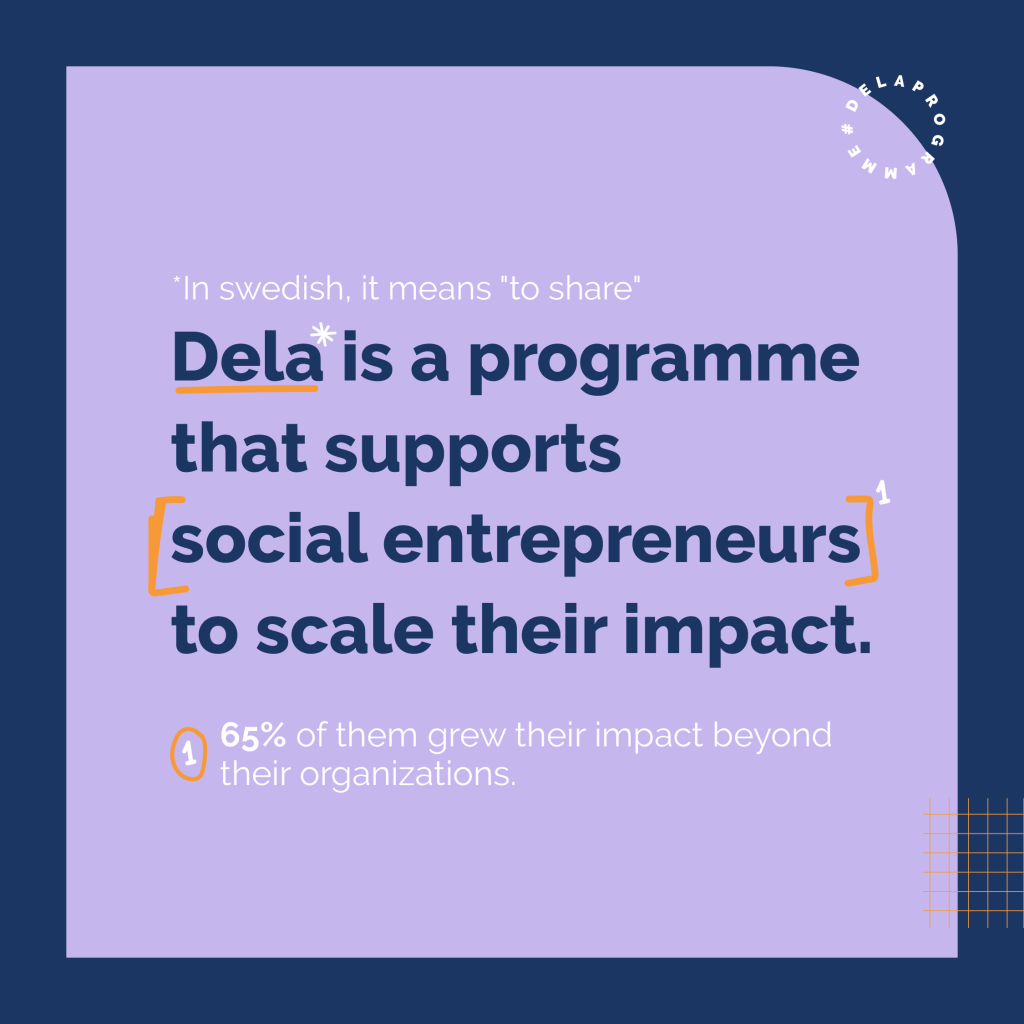
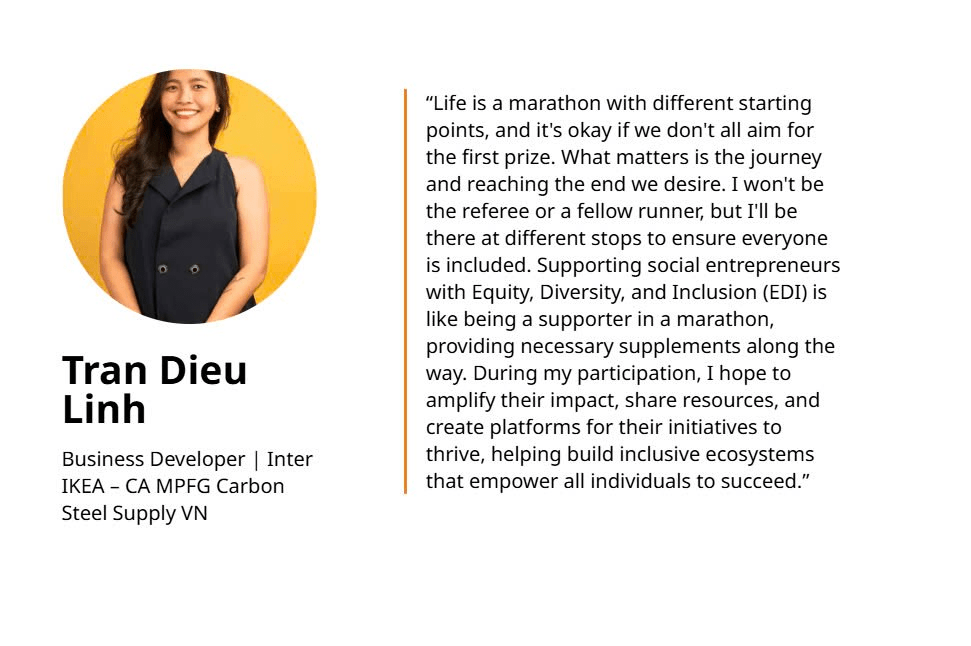
Over the next months, I will be joining the #Dela Programme to work with Ryan Gersava and Virtualahan Inc. to support them enhance their systems change strategies and scale their #impact. #Dela is a global accelerator programme co-created by @Ashoka and #IKEASocialEntrepreneurship
#systemschange #socialinnovation #Delaprogramme

I will begin documenting my journey by capturing new things I learn, as well as any misunderstandings or misconceptions I had earlier. This will allow me to reflect on my progress later on. These notes will cover insights from both the program and external experiences aimed at improving my knowledge and competence in Social Entrepreneurship and Equity, Diversity, and Inclusion (ED&I).
***
1st Note – August 29, 2024 – Equity and Equality:
For many years, I didn’t clearly distinguish between these two terms until I attended two workshops in the past week. One was “Exploring Diversity, Equity, and Inclusion (DEI) Practices for Employee Recruitment, Retention, and Engagement” at the American Center, and the other was hosted by Ashoka. Both workshops reminded me of how I had misunderstood these concepts.
- Equity means providing resources tailored to each individual’s needs to ensure their success.
- Equality, on the other hand, means treating everyone the same, regardless of their specific needs or differences.
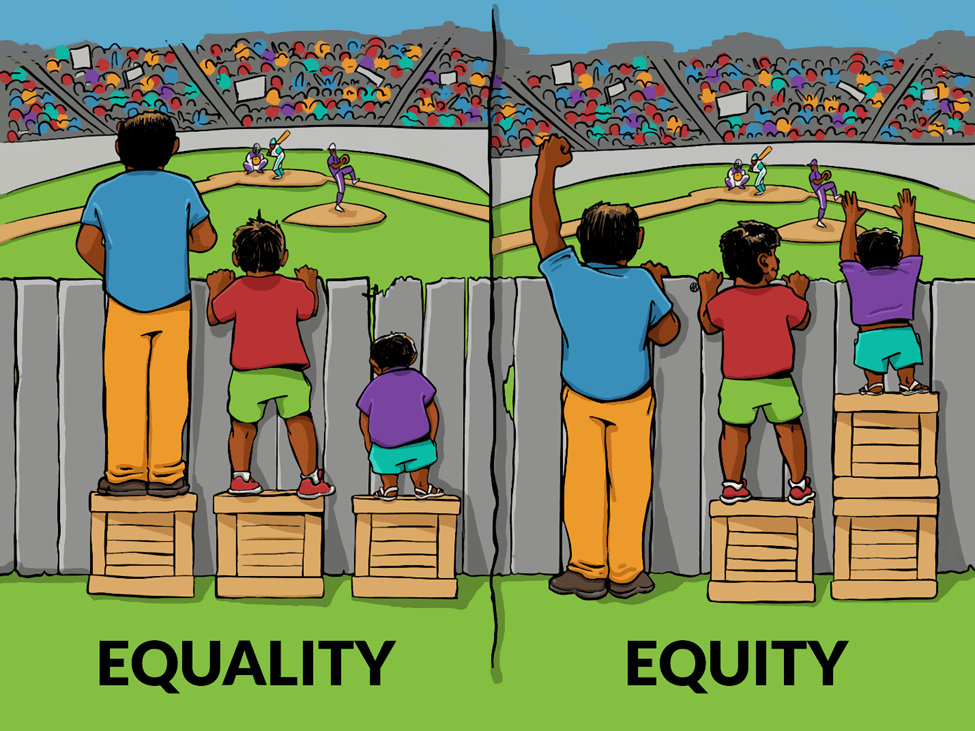
A memorable analogy from the workshop explained: “Equality means giving everyone the same pair of shoes. Equity is giving everyone a pair of shoes that fit.” At the American Center workshop, the guest speaker illustrated this with a practical example: equality is when everyone has the chance to go on stage, but equity is when the stage also has a wheelchair ramp, supporting those with mobility needs.
***
2nd Note – September 3, 2024 – Communication Guidelines:
This session was exactly what I needed because I often use adjectives and nouns without realizing they can be sensitive. I learned the importance of putting people first, rather than grouping them by characteristics.
For example:
- Children with disabilities, not disabled children.
- People living with HIV, not AIDS patients.
- People living in poverty, not poor people.
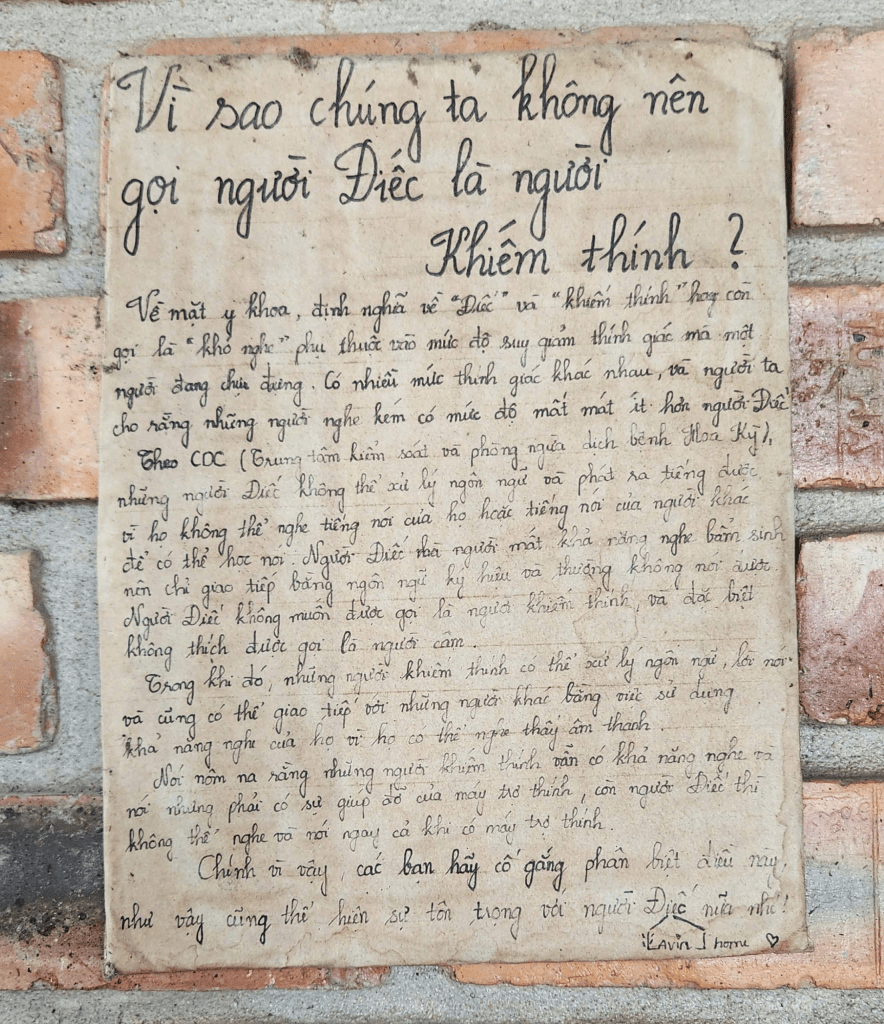
During my visit to Lavin Home, Nhàn, the owner, shared a handwritten note explaining the difference between “deaf” and “hearing loss” (điếc và khiếm thính). In Vietnam, we sometimes assume they are the same, which leads to miscommunication and misunderstandings in our interactions with people who are deaf.
***
3rd Note – 25th Sept 2024
During our weekly strategy call, Ryan shared a story about Starbucks in the Philippines.
The company that operates Starbucks there recently faced public backlash and had to apologize after a viral controversy over a signage that limited the 20% discount for senior citizens and persons with disabilities (PWDs) to only one food item and one drink per visit. Essentially, the offer came with restrictions that didn’t sit well with the public.
This brought to mind a situation involving a coffee chain in Vietnam just a few weeks ago. When the northern region was hit hard by a typhoon, the brand launched a social media campaign, pledging to donate 1,000 VND from each drink sold (about 70,000 VND each). The response, however, wasn’t what they expected. Many people felt that it would be better not to buy coffee at all and instead donate the full amount to support those affected by the typhoon. Despite the company’s efforts to explain, the original approach seemed to miss the mark. It made me wonder—what if they had made the donation first and then shared it as a gesture of gratitude, thanking customers for their support? Would that have left a more positive impression?
The Vietnamese coffee chain is not directly about EDI, but they do make me think about how actions are perceived. Even when we’re trying to do good, if it’s not purely out of a belief that it’s the right thing to do, people can sense it. Good intentions can easily get lost when there’s another motive at play.
Embedding EDI in an organization really has to come from a genuine belief that it’s the right thing to do. Yes, it can motivate people and enhance the brand image, but it’s important to be mindful of how these stories are communicated. I hope that one day, EDI becomes a natural part of society, something we pass down to the next generation as simply the norm. For now, it still feels like a progressive goal that companies pursue, often with different purposes in mind.
Then, a thought partner posed an interesting question during our discussion: how can profit and purpose come together?
***
28th Jan 2025
At the #Dela Summit this February 5-7, leading social entrepreneurs, business
and thought experts will be making meaningful connections and get the tools
to succeed in implementing their systems change strategies.
Learn more about #DelaProgramme and the Summit this year by checking our
website: https://www.ashoka.org/en-nrd/program/dela-programme
*to be continued*



 Lynn By Linh
Leave a comment