The Five Love Languages – Book by Gary Chapman

I wished I had read this book earlier—before I started my first relationship and marriage. But better late than never. I hope I’ve learned a big lesson in my life, and from this book—so I won’t mess up again. Because it’s not just one life at stake, but two: mine and my son’s.
***
I was encouraged to read this book coincidentally during my first trip to Europe. It was in Venice, sharing a room with other girls. We randomly started talking about love—maybe the city itself inspires that topic. One girl admired Shakespeare and wanted to visit a place related to the Romeo & Juliet love story. We talked about romantic things, and I said I’m not really into that kind of romance. The girls asked how sure I was. Hmm. Then we kept talking, giving more and more examples, and I realized I might be partially wrong. I needed to learn more about myself. Then one girl from the United States mentioned the 5 Love Languages, and suggested I explore it to find out which ones are mine. That’s how I discovered the book. I even did a test on their website and app, which you can find here: Discover Your Love Language® – The 5 Love Languages®
***
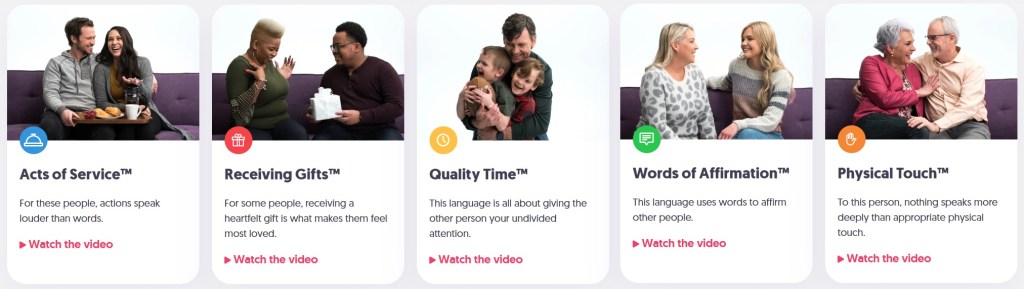
Get to know the different types of love languages. Yes, people speak different ones—and to truly connect, we need to learn our partner’s love languages and speak to them in that way, and vice versa. You can find out more on the official website or by reading the real stories and examples in the book.
***
Surprisingly, what stayed with me the most from this book was the concept of the “love tank.”
“Inside every child is an emotional tank waiting to be filled with love. When a child truly feels loved, he will develop normally. But when the love tank is empty, the child will misbehave.”
From my own experience, a child with an empty love tank can grow up miserably. They might seek love everywhere, even in the wrong places or from the wrong people. They might believe that a simple kind word or small gesture is already love—just because they never experienced it growing up. They think the more they give, the more they’ll receive, so they keep giving and giving… until even the little left in their love tank is gone.
I remember a friend once asked why I loved a guy, and I said, “Because he’s a nice guy—he checked on me once when I cried.” She was surprised I noticed such a small action and thought it wasn’t a big deal. But to me, at the time, it meant a lot. No one had ever asked how I felt, but he did—so I thought he was worth loving.
Even now, I’m not sure what my primary love language is. I feel like I relate to all of them, a bit of each type. Because “There are two kinds of people who may have difficulty discovering their primary love language: the person whose emotional love tank has been full for a long time, and the one whose tank has been empty for so long they don’t remember what makes them feel loved.”
I need to revisit those early experiences—why him? What made me feel “in love” back then?

***
Another big lesson from the book is the difference between love and being in love.
People can fall in love—and later fall out of it.
“The in-love experience does not focus on our own growth or the development of the other person. Rather, it gives us the sense that we have arrived.”
Some researchers, like psychiatrist M. Scott Peck and psychologist Dorothy Tennov, agree that the in-love experience shouldn’t even be called “love”. Looking back at past relationships—how early did we say, “I love you”? Sometimes just a few weeks or months into dating. Was that really love?
I’ve asked myself: why do some couples stay together for years and still deeply love each other? I used to dream of a love that lasts a lifetime—ever since my very first relationship. But over time, I’ve learned it’s not for everyone. It only happens when both people truly understand and live by this idea: “Love is something you do for someone else—not something you do for yourself.” I admire couples who weather tough times, who forgive, who make sacrifices.
I don’t have that. And honestly, I don’t think I can make that kind of sacrifice for anyone anymore—except my son.
The book says: “Most of us enter marriage by way of the in-love experience. We meet someone whose physical appearance and personality traits create enough spark to trigger our ‘love alert’ system”. That was true for me. Most of my relationships started that way. Even when I later realized we didn’t match, I still made excuses and stayed as long as I could. I gave away the last of what was left in my love tank. I have no more to lose.
I saw this quote recently: “If you get on the wrong train, get off at the nearest station. The longer it takes you to get off, the more expensive the return trip will be.”
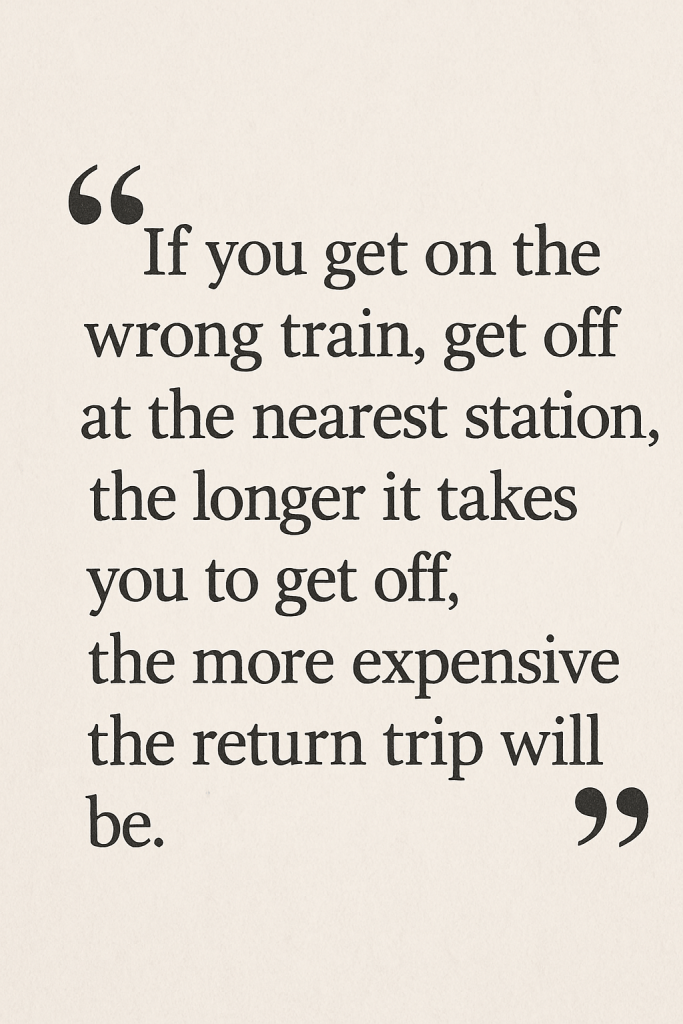
I’m finally getting off the train—after almost 7 years. It’s been a costly lesson, but at least now I can have peace.
And one very practical piece of advice from the book: “The average life span of a romantic obsession is two years. If it’s a secretive love affair, it may last a little longer.”
Remember that number. Don’t take major actions within this period. Of course, some people meet “the one” instantly and stay in love for life—but how many couples experience that? Better not to risk it, because the “in-love” obsession won’t last forever.
***
Lastly, there’s a chapter about children and love languages, which made me reflect on time with my son.
Sometimes I’m so tired, lying on the bed while he’s playing, my eyes closing—and he says, “Mommy, open your eyes, play with me”. When he’s studying, he wants me nearby, fully focused on him. If I work at home, he’ll even turn off my laptop to make sure I give him undivided “quality time.”
Every time he finishes a worksheet, he shows it to me and says, “Excellent!”—and hopes I’ll say the same. Why is it that as children grow, our words of affirmation turn into criticism?
I wish I could stay awake more—so my son’s love tank can be full. I want him to experience every kind of love language, so one day, he can share them with someone he loves.
***
To close this article, a quote from the book:
“At the heart of mankind’s existence is the desire to be intimate and to be loved by another. Marriage is designed to meet that need for intimacy and love.”
I always remind myself—no matter how many times I’ve failed in love, I still believe in it. Same with marriage. Maybe it’s not for me. Maybe it’s not for everyone.
But love is still out there. So don’t lose your trust in it.
Thank you.


 Lynn By Linh
Leave a comment