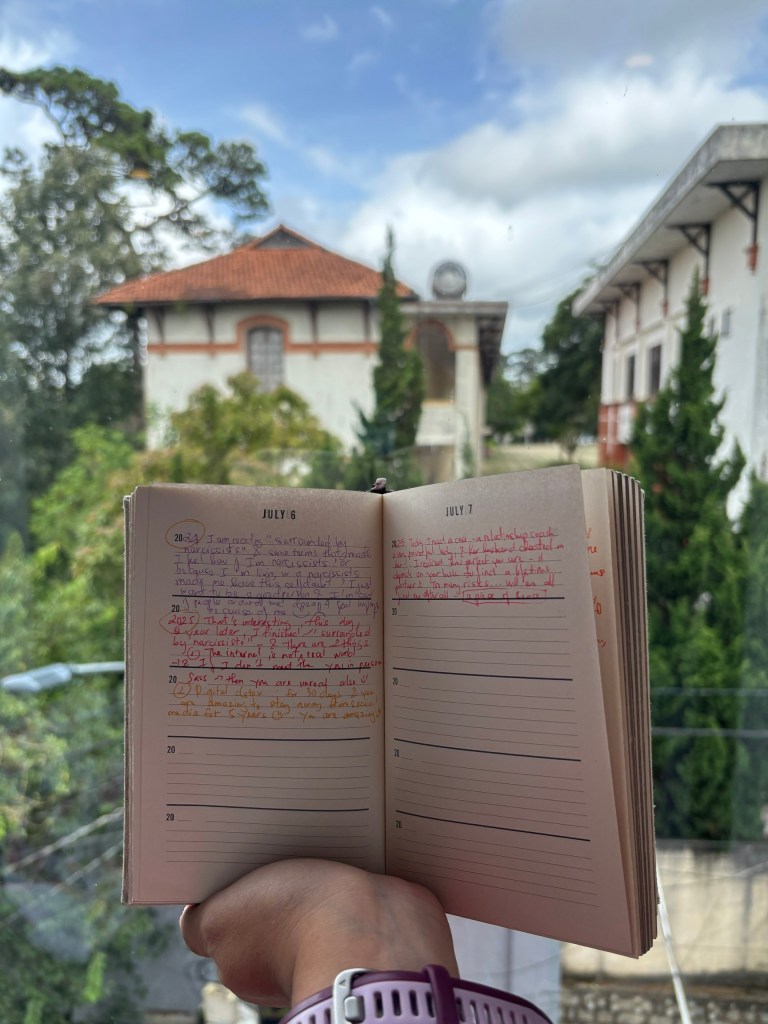
I completed the book on July 5th, 2025, and made a note in my One Line a Day journal. Interestingly, exactly one year ago on the same date, I had also mentioned this book in the journal. It took me a year to finish it, and it has truly stayed by my side throughout. During this time, it has helped me realize so many things.
Thomas Erikson has written several books about human behavior, and this was the first one I bought. One statistic that shocked me was: “Clinical narcissism occurs in somewhere between 1% and 2% of the population.” That’s already too many. This book offers foundational knowledge about narcissism—what it is, how to survive when surrounded by narcissists, and how to avoid becoming one ourselves.
It’s not a disease—it’s a personality disorder. And growing up and living in our current society creates many opportunities and temptations to develop narcissistic traits. This book helped me face not only the pain of being around narcissistic behavior, but also the fear of becoming one myself.
This is the book I recommend most if you’re unfamiliar with narcissism. It lays the groundwork before diving into deeper or more clinical resources.
A narcissist pursues the idea of personal perfection, while as humans, we can still strive to improve ourselves—but with a different mindset. It’s the difference between perfectionism and continuous improvement.
“Thinking a little less about ourselves and a little more about one another is the road to true success and happiness.”
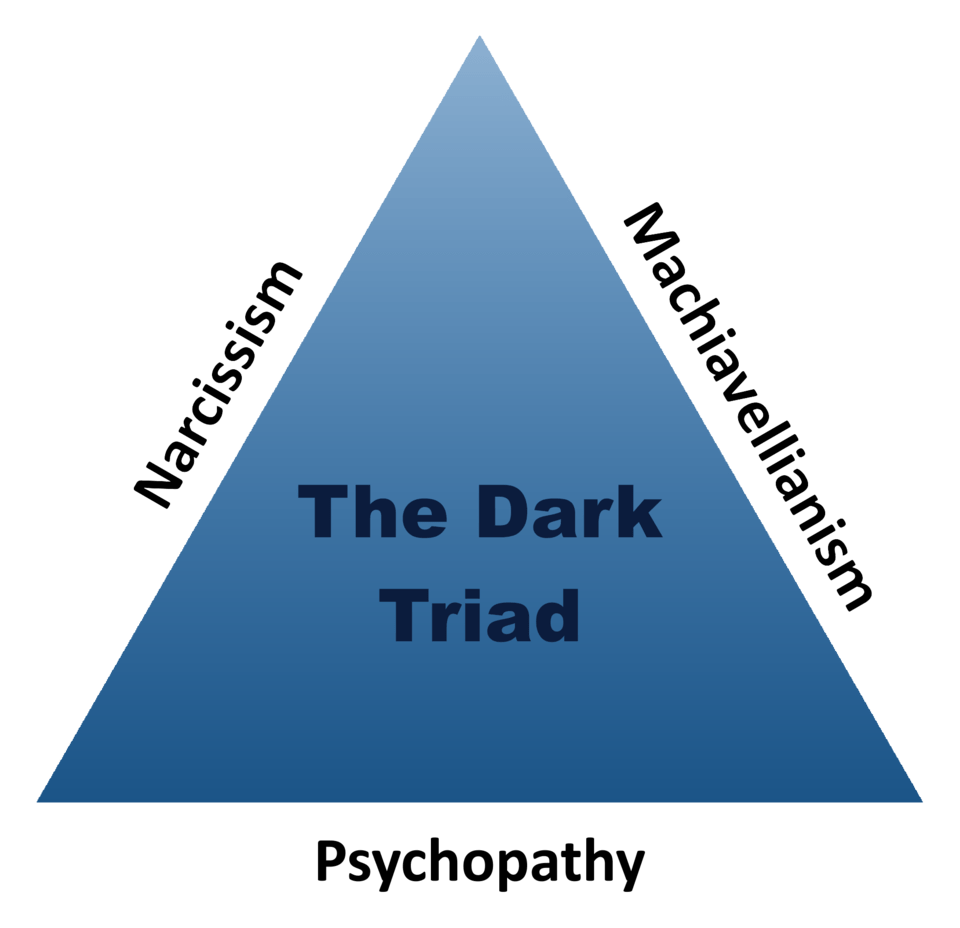
The book also introduces the Dark Triad: psychopathy, Machiavellianism, and narcissism—along with checklists of behaviors related to each.
It also introduces the DISC model, which you can test later, and a self-assessment to see where you might fall on the narcissism scale.
A few signs of narcissistic behavior that helped me recognize it more clearly:
- They blame the world for their failures. I heard this narrative for seven years—how unlucky he was, how lucky I was—so often that I started to believe everything I had was just because I was lucky, and that I was somehow responsible for his failures.
- They disregard rules, making them unpredictable. In my case, I was never able to set boundaries because from his point of view, there were no rules—he was the “god” of everything.
- They take without sharing. I remember preparing dinners, stepping away briefly for a call, and returning to an empty table—even when my mother was present. It didn’t matter to him. It happened more than one time.
- In love and relationships:
- They talk about themselves a lot.
- They call you their soulmate after a few weeks.
The key for you is to compare their words with their actions. Love bombing can go on for at least a year.
- They isolate you from the good things and the people in your life—giving you what you crave, then threatening to take it away. When you look around, there’s no one left to help you realize what’s happening.
- At work, they may be the boss who sends you on an emotional roller coaster.
There is so much more to learn in the book, and it helped me become more conscious of narcissistic behaviors. Every single lesson helped me reflect on the past seven painful years.
Being with a narcissist makes it nearly impossible to understand what self-love or self-acceptance really means.

A reassurance:
I was afraid that maybe I was a narcissist too. Living so long with one made me doubt my own kindness. But the book reminded me:
“Thinking about yourself isn’t strange—it comes naturally. But it’s important to also think about others.”
And I always do. I always take others into consideration, even when making the hardest decisions—like my divorce. I spent months, even years, worrying about how he might feel, whether it was the right time to deliver the news, maybe I waited other few months, and few months. I prioritized him, when I shouldn’t have. That only made things harder after all, because of his narcissistic behaviors. I was never in his consideration. It was always about his feelings, his winning.
How I hope to raise my son:
- We may be unique, but we are not more special than anyone else.
- We can support our children, and they can rely on us, but they must be responsible for their own decisions.
- We should not give young children the role of decision-maker in the family—like deciding where to eat.
Final advice – Digital Detox
The author also offered advice on digital detox, which I found valuable. I’m halfway through this journey. After my divorce, I lost access to my Facebook account. In the past, I was afraid of missing out—FOMO kept me clinging to social media.
Two things worried me:
- What if I miss out on what’s happening in the world?
- How will I stay in touch with friends?
But after a few months without Facebook, I found real benefits:
- I’m not missing anything important—just staying away from negativity and trends.
- I have more time to truly connect with close friends via other apps.
- I now have more time for myself, for journaling, and for doing things that matter.
I even admire a friend, S., who hasn’t used social media for 5 years. That’s something to be proud of—choosing to spend time with the people who matter and doing things that truly fulfill us.
Let’s see how far I can go with this digital detox. I want to maintain my reading and journaling habits—as a commitment with my best friend Hana, who will be cutting off her TikTok account to focus on learning PowerBI.

Thank you.


 Lynn By Linh
Leave a comment