
If the manager or leader is the one driving the roller coaster, how does that impact others who are in that circle?
This is not the kind of manager or leader I want to become. But it’s important to stay conscious and simulate ourselves in that situation. This is also one of the reasons I’m not aiming for a managerial position right now—at least not until I’ve experienced an ideal role model myself, which I know exists.
I have high expectations of leadership—not only from others but also from myself.

See Different Perspectives vs. Receive Different Perspectives
My concern when working with a person is not about having different perspectives—that’s quite normal—but whether they are open to receiving them.
As a manager or leader, if we insist others follow us, interfere in their work, and feel threatened when we are not part of the decision-making process, then we’re not creating leaders—we’re just looking for followers.
For me, great leaders are the ones who create other great leaders, not followers.
I had a manager who often told me, when I shared my proposals, he would share his perspective, but he always encouraged me to test mine. Even if he had tested and failed before, he reminded me, “Different times, different outcomes.” He told me I shouldn’t give up until I had tested it myself several times.
Later, I did the same with my assistant. Both my manager and I had failed many times with that supplier, but my assistant succeeded. Again—different people, different time, different approaches, different results.
Being Tough vs. Being Rude
While working with him, I cried many times. His words were tough. He never tried to play nice with me. But every word he shared was consistent—and it shaped who I am today.
It was hard to move from an operational role to a sourcing role and deal with colleagues who always saw me as a competitor. I used to complain a lot. He told me, “Nagging and complaining won’t help.” I stepped out of the room, heartbroken. I thought about his words for many nights—and he was right.
I silently solved my tasks and did my work. He knew every single thing—even when I didn’t share. And when the time was right, he came, complimented me, and even asked others to quietly celebrate the success with me. 😊
People often mistake strong words for rudeness. There are managers who can say tough things, but with good intentions. I later found out he even checked with other colleagues about how he was approaching me—just to ensure he was pushing me out of my comfort zone, but not breaking me into pieces. But there are managers who say tough words in front of others, or when its unnecessary or even in the celebration…then that is rude, not tough.
ON vs. OFF
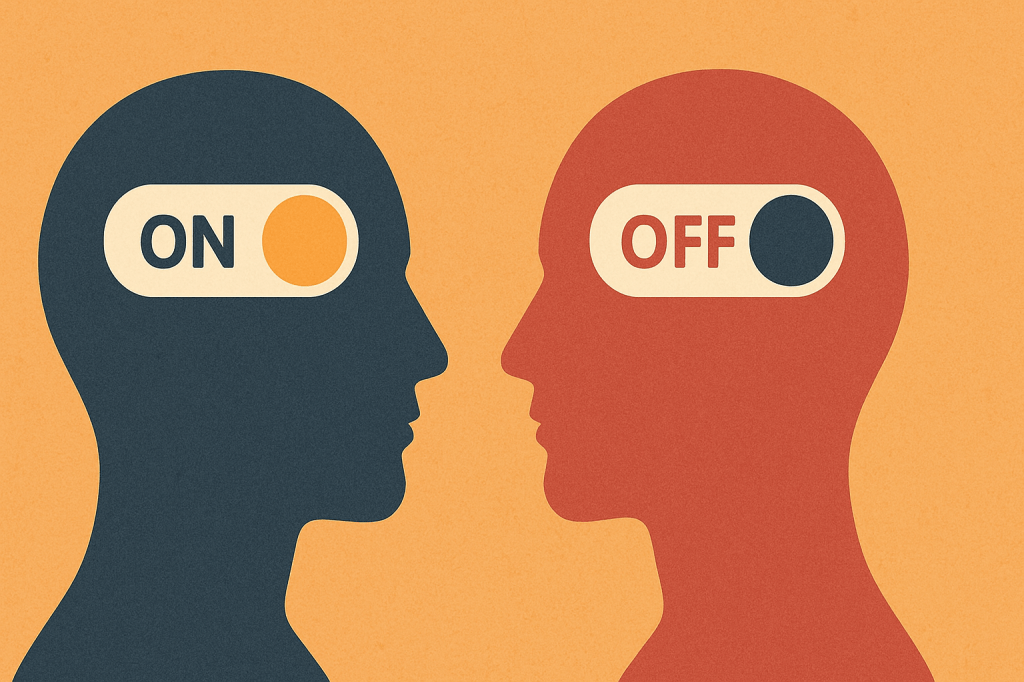
Sometimes, inconsistency between what we say now and what we say later also impacts others. We can be flexible. We can change. But without a standpoint—and when we speak before our thoughts are processed—it makes things messy.
Sometimes we say A, other times A-, completely neglect A which we said earlier. Sometimes we say B but actually mean A, then we go back and want A again. Following inconsistent expectations is painful because others don’t know what to fulfill. And maybe even they do not even know what they want?
This creates a lack of psychological safety. You don’t want to step into a room and talk to these people because you don’t know if today their ON or OFF day is. You don’t know if they may complain you why you do B not A. Your emotions get affected by their energy and inconsistencies.
Honestly, being with a consistently bad leader is still better than being with one who gives you inconsistently mixed feelings—at least then, you know what you’re facing.
The relationship between a manager and an employee is just like a relationship with a partner. Sometimes you’re in an environment and you don’t even realize it—until you step out and look back. Then you wonder: How did I survive that?
Yes, you can cry in a relationship. It could be happy tears, sad tears, or a mix of feelings. But if you feel like you’re riding a daily emotional roller coaster…
- You’re afraid to talk to that person because you can’t predict how they’ll react?
- You carry their emotion and energy out of the room instead of your own?
- You feel uncertain about yourself and question your existence?
- You wonder if they truly have empathy—not just in words but in deep thoughts?
- You hear how they talk negatively about others and wonder if they talk about you the same way?
- You don’t know whether they are truly good managers from the heart for the others or just trying to prove themselves to the world?
If you’re asking yourself too many questions in this “relationship,” maybe it’s time to pause.
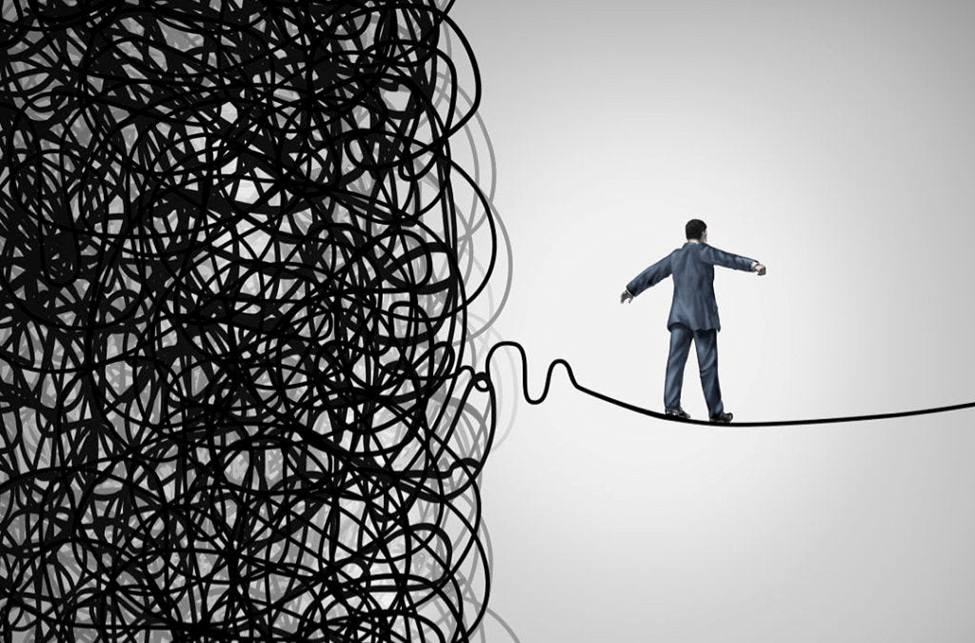
Step out of the roller coaster. Watch the ride from outside.
Is this something you want to continue? Or something you’ve had enough of?
Are you on the roller coaster?
Or do you want to drive one?
As for me—I don’t want to be on the roller coaster.
No matter the position—driver seat or passenger seat—it’s just not for me.
Thank you.


 Lynn By Linh
Leave a comment