
A book about a mid-30-year-old girl — Nora — who wants to end her life, but then she is given a chance to experience the moment ‘in between’ life and death, in her library.
Her current life filled with grief, peer pressure, regret, guilt, and depression — and somehow it all happens at once, like continuous waves with no pause. It triggers her.
In her midnight library, every book she enters is a very different life that she regrets not choosing in her real life. What will she decide at the end? What lesson will she learn in different life?
Her “in-between” place is a library, but it can be a different place for each of us — a place where we feel safe, I guess.
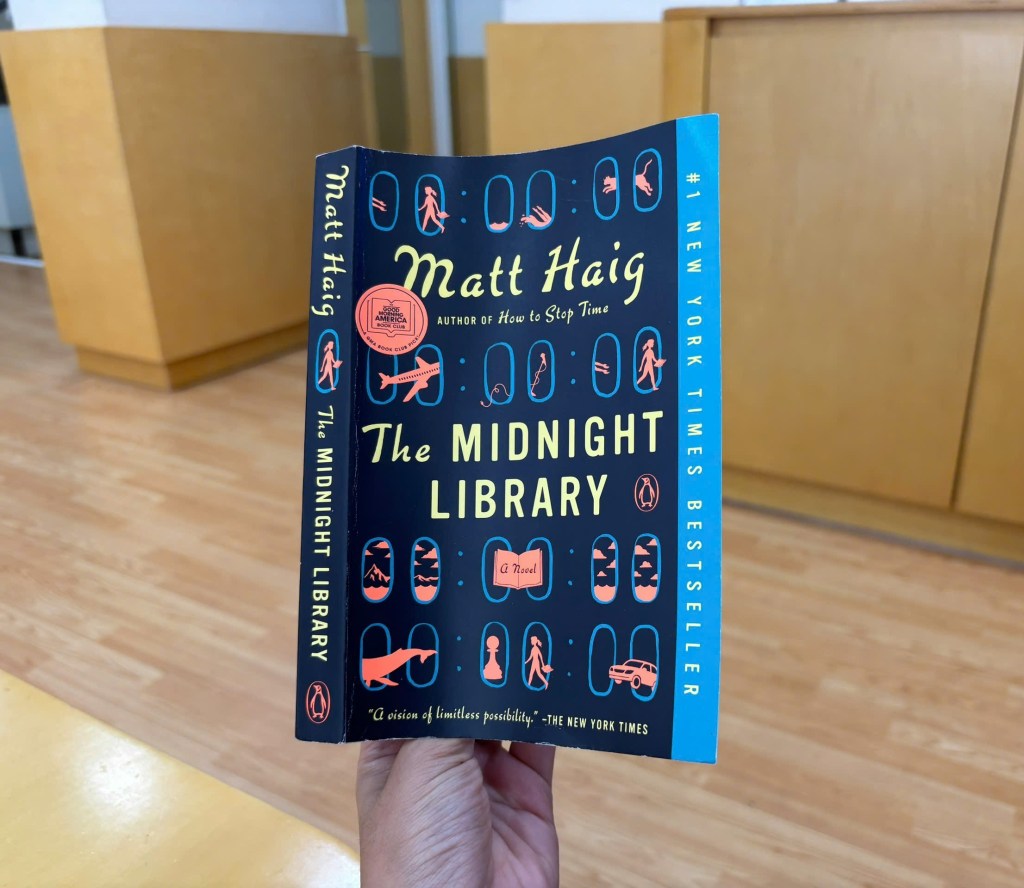
We often regret the things we didn’t do; however, if we had done them, are we sure they would have been the best for us? Don’t let our memories trick us — there is always a reason why we didn’t choose those paths in the past.
We can’t rewrite or erase the past, but we can still write our future.
The book is mainly about conversations, the possibility of other lives, other choices, and the decisions we have made — even small ones can impact other people’s lives — and the philosophy is brought to life. & I love this line:
“The only way to learn is to live.”
“The sky grows dark
The black over blue
Yet the stars still dare
To shine for you”
Even though it is a book about experiences between life and death, it is not heavy — it is full of new experiences and new stories. As a reader, I feel how much Nora deserves a happy ending — a good life shaped by her kindness. Even in the last moment, when choosing death, she still says, “Be kind to each other,” in her final note. And I find myself wishing for the best possible outcome for Nora.
“One thing I have learned (written by a nobody who has been everybody)” – I love these last pages because they feel relatable to everyone.
It is an expected ending, yet full of hope and love.
However, I also am curious to ask the author:
Nora having the chance to live different lives is good, but also unfair to her. She is suddenly thrown into each life without growing up in it, so she doesn’t fully understand or embody that life. Because of this sudden transition, her feelings and decisions might be influenced by shock, not by what she truly wants. She may reject a life not because she doesn’t want it, but because she hasn’t had time to emotionally adapt.
However, I also feel this unfairness might be intentional? In real life, people often reveal who they are in sudden, unexpected situations rather than when everything goes according to plan. By putting Nora into difficult moments of each life, the author may be showing how people react when things don’t go the way they want, and what choosing a life truly means under pressure.
And why do the later lives in the book move much faster than the earlier ones, with pacing that feels rushed compared to the beginning?
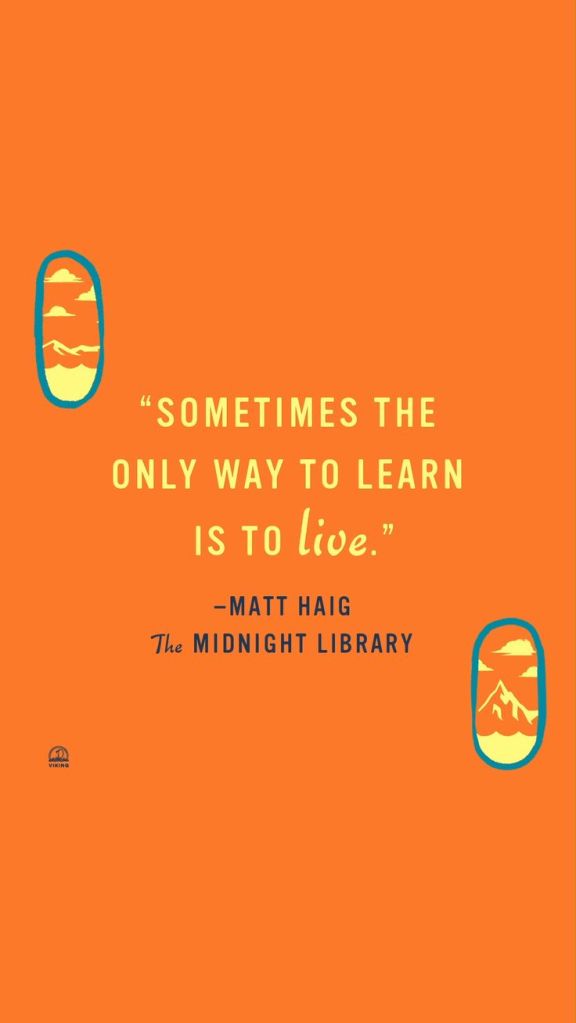
I finished the book in the last month of the year — what a good book to close my 2025, with so much learning through living. Again — “The only way to learn is to live.”
Thank you.



 Lynn By Linh
Leave a comment