In summary, the whole book—every single word—is an affirmation that the author wants to guide you to. It feels very calm, peaceful, and positive. When reading it, I can imagine myself listening to a very warm yet powerful and determined voice.
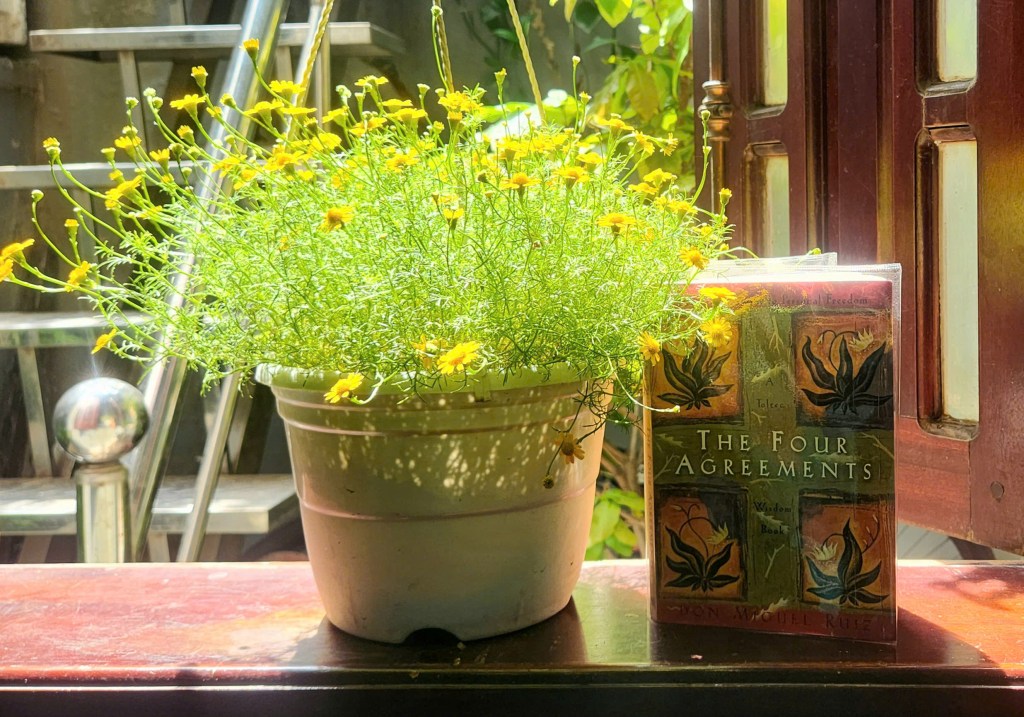
Going through the Four Agreements is like following a compass, so I printed them out and kept them on my computer to remind myself every day. You can also download the poster on the official website.
The Four Agreements Official Website
The Four Agreements – don Miguel Ruiz
***
Here are some highlights I had while reading, and I’d like to store them digitally here as a way to reflect on them again.
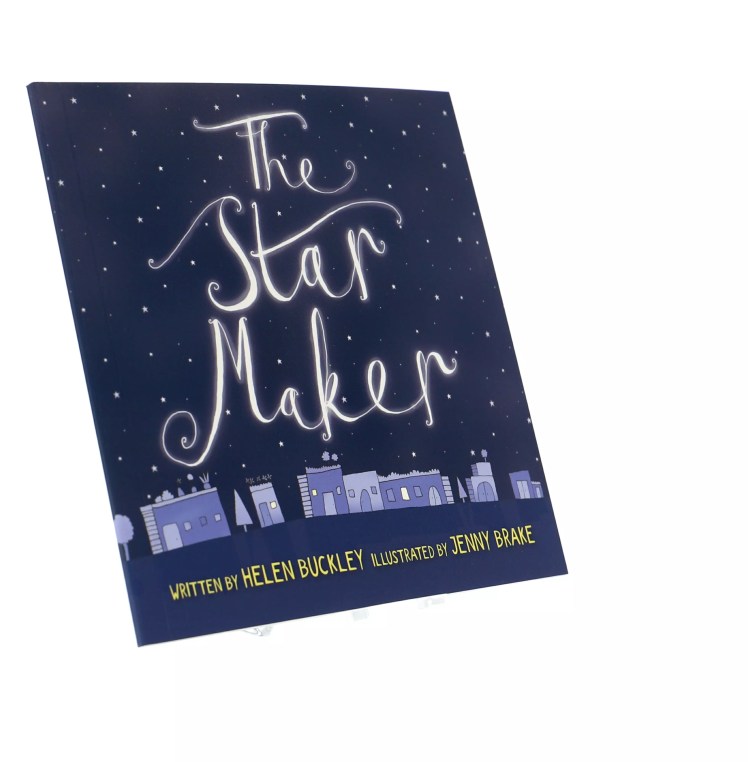
“Everything is made of light” – This reminds me of my son’s favorite book, The Star Maker by Helen Buckley and Jenny Brake.
“Dreaming is the main function of the mind” – I smiled when I read this. It reassures me that it’s completely fine to dream and be a dreamer.
“’Attention’ – Children compete for the attention of their parents, their teachers, their friends… and this continues into adulthood.” – My son, Nasa, always asks me to look into his eyes when we talk and play. He doesn’t want me to be distracted. If I try to use my laptop at home, he will come over and shut it down, saying, “Mommy, don’t work at home.” Of course, I always listen to him. He needs my attention, and all kids do. I used to, too. I sometimes read articles about spoiled kids, and I wonder if, in some cases, they are just seeking attention from busy or inattentive parents.
“Children believe everything adults say.” – It’s incredible how well kids remember things. Words stick in their minds for years, even if they were toddlers when they heard them. If you tell them something is right, they believe it’s right. If you tell them they are bad, they believe they are bad. If you say a doctor is the most successful job, they may grow up believing that’s the only option. This whole process is called the domestication of humans.
“In human domestication, the information from the outside dream is conveyed to the inside dream, creating our whole belief system.” – “Children are domesticated the same way we domesticate a dog, a cat, or any other animal.”
Beyond the Four Agreements, understanding the domestication of humans is crucial. One day, we may realize that we are living someone else’s dream—our parents’ or society’s—rather than our own. These beliefs were installed in our minds when we were children.
I wish we, as parents, had better emotional control, used more positive words, and shaped our children’s personalities with care while giving them freedom of choice. I don’t want my son to grow up with “the fear of being rejected becoming the fear of not being good enough“. I don’t want to use punishment for small mistakes that are part of his journey of self-exploration. When he spills water while trying to drink or makes a mess while helping me cook, I say, “It’s okay.” When he misplaces stickers in his workbook, I say, “It’s alright.” And you know what? When I make mistakes, he now tells me, “Mommy, it’s okay.” I’m not perfect, and I struggle with controlling my anger sometimes. But I believe I can do better.
“We have a powerful memory. We make mistakes, judge ourselves, find ourselves guilty, and punish ourselves.” – Interestingly, we do the same to those around us. We send emotional poison to others again and again. For me, when mistakes happen, there are only three choices: let it go, let them go, or remove myself from the situation. There is no need for anyone to live in poison.
“Religions say that hell is a place of punishment, fear, pain, and suffering, where fire burns you… but whenever we feel emotions of anger, jealousy, envy, or hate, we experience a fire burning within us.”
So, are we already living in a dream of hell?
“We judge others according to our image of perfection.” – That’s my struggle. I often wonder why people act a certain way, wishing they would do things differently based on my image of perfection. Then, I feel disappointed when they don’t meet my expectations. But I realize now—I’m wrong.
I have a tattoo that says “Don’t judge”—a reminder not to judge myself or others based on our own image of perfection. And our image of perfection is shaped during domestication. Is it really who we are? Or just what we were told to be?
“Nobody abuses us more than we abuse ourselves. If someone abuses you slightly more than you abuse yourself, you will walk away. But if someone abuses you slightly less, you will tolerate it endlessly.”
This sentence made me pause. I spent years abusing myself emotionally, and when I finally walked away, it meant they had crossed the boundaries — even more than what I had done to myself.
Thank you for reading.
*To be continued*



 Lynn By Linh
Leave a reply to Manifest: Beyond Limiting Beliefs – Lynn By Linh Cancel reply